If not now, when: ten years of Ford Media Lab
tl;dr
Ford Media Lab turns ten. A cocktail consultancy, a boss’s question, two cameras bought with a magazine deal, a peak year in 2020, and the year we built a second business inside the first.

Ford Media Lab is ten years old today. The initials are older: Ford Mixology Lab was a San Francisco cocktail consultancy and a pair of matching tattoos before it was a company. The studio proper started September 1, 2016 in a Williamsburg apartment, with two cameras paid for by a magazine deal signed before we’d left our last jobs. Ten years, four studios, over $5 million in revenue, more than forty brands, and still two people. This is how it happened, including the year it almost stopped happening, and where the next ten years go.
If not now, when
Every studio has a founding line. Ours was said by someone else, and he probably wasn’t trying to be profound. Then again, Richard is French, and everything he said arrived with a certain foreboding weight, so it’s hard to know.
In 2016 Kyle was five years into Rémy Cointreau, running the Collectif 1806 brand ambassador team as the house’s resident cocktail and spirits specialist. The people above his boss wanted to move him into something more corporate. He didn’t want the desk or the fluorescent light. He also didn’t want another year on the ambassador circuit. Anyone who has done it will tell you what that job actually is. Sunday, 6am, the alarm goes off after four hours of sleep, two straight nights of big bar tabs at trendy cocktail bars have your brain in a vice, and the reason you’re awake is an airplane. Then it’s 8am on a local morning show, the host’s fake smile, good to see you again, and instead of remembering your media training you take a shot of tequila on camera because it’s what the segment (or your hangover) needs. Ready and exhausted, every day, in a different city. There are people built for a decade of that. Kyle had done five years and knew he wasn’t one of them.
Richard Lambert, his boss, listened to all of this. He didn’t argue for the promotion and he didn’t argue for another year on the road. He suggested a third door: maybe it was time to start something. And if not now, when.
That was the push. Before Kyle had cleared out his desk we were already building the concept for 1806 Magazine, a city-by-city cocktail culture publication in the spirit of Drift, and securing that project before the exit paid for two Sony A7R IIs. Our first real cameras. Rachel had come up the same way, bartending in San Francisco and New York before being the face of Tanqueray Gin at Diageo, and she’d been saying it for a while: two people who know the trade from inside the bar should be the ones making the content brands need.
The name was already waiting. Ford Mixology Lab started around 2010 in San Francisco as a cocktail consultancy and a blog, back when we were both still closing bars for a living. We got matching FML tattoos in the city before we moved to New York in April 2011, and registered the LLC later that year. So the letters were on our arms for five years before they were on a business card that meant anything. In September 2016 we kept the initials and swapped the middle word. Ford Media Lab. The mixology stayed in the tattoo.
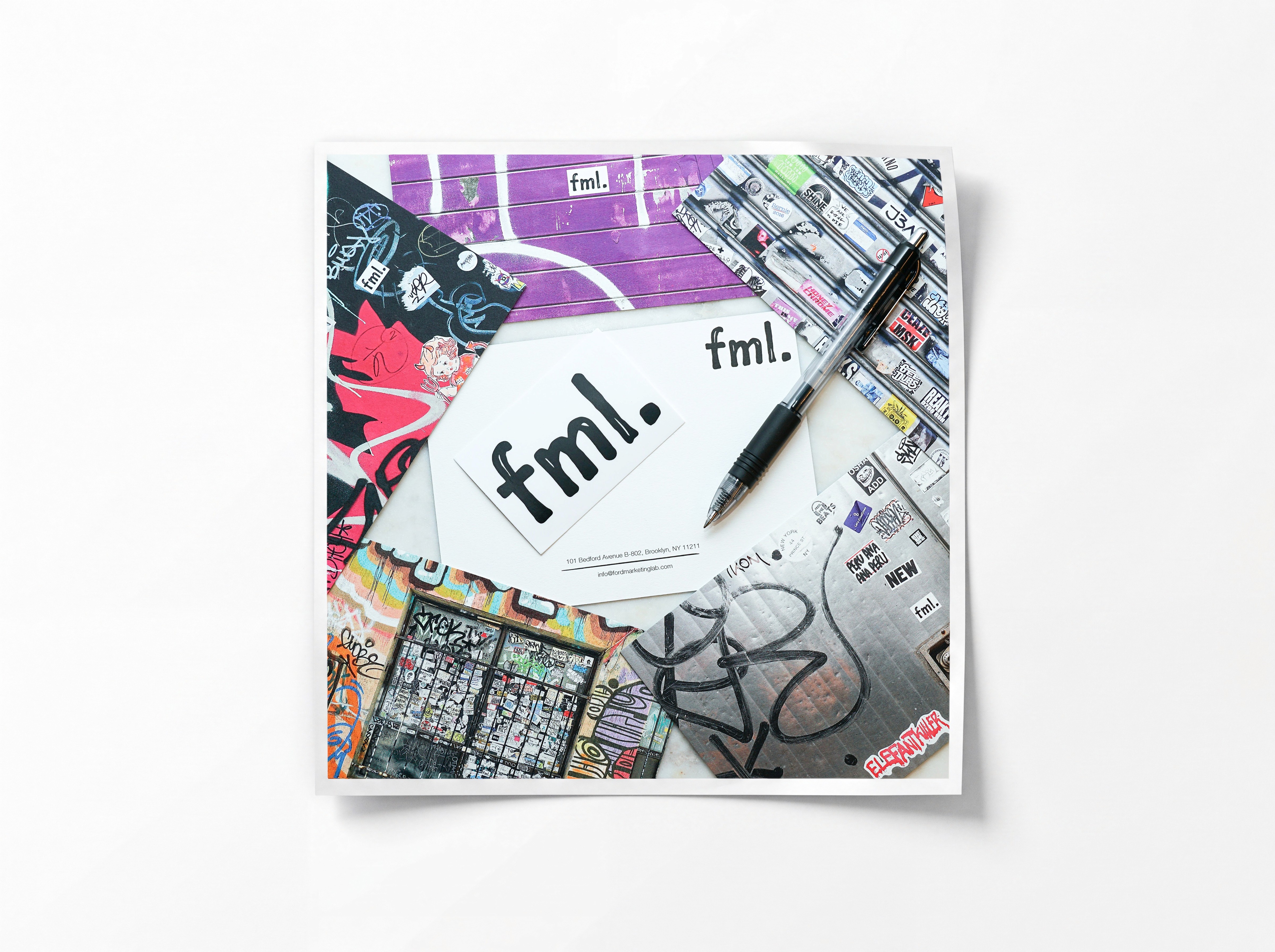
The first logo was a font Kyle found, printed as stickers we slapped around town and then photographed as postcards. The postcards also caught the two weeks we almost called it Ford Marketing Lab. Media won. Some decisions you only get right once.
The first ninety photos
The magazine was supposed to be job one. It wasn’t.
Ashley Kalus, then the brand manager on Mount Gay Rum, heard internally that we were leaving to start an agency and handed us the brand’s website overhaul. Ninety photographs, seventy-five of them white-background studio shots and fifteen lifestyle images at New York bars where we knew the people behind the stick, plus recipe development and a run of cocktail videos we also starred in, because the talent and location budgets were near zero and we worked cheap. Around $35k, all in, in September 2016. Not a bad start.
We had no idea what we were doing, at least technically. We bought continuous LED panels, a pop-up light tent from B&H, and a great deal of confusion, and shot seventy-five cocktails on a white sweep in a one-bedroom apartment that smelled like rum for a month. Rachel styled every drink. Kyle shot them and then learned Photoshop, at breakneck speed, to make them presentable. The work was not good by the standard we hold today. It is funny in hindsight that white-background cocktail and product photography became the thing we were known for, because the first attempt was amateur hour with better intentions.

But a workflow was born in that apartment, and the client was happy. Mount Gay led to Cointreau, Rémy Martin, The Botanist, Bruichladdich, Metaxa, and St-Rémy. Nearly every brand in the house had projects for us. The trade credibility opened the door. The willingness to learn in public, fast, kept it open.
Three cities, then Cleveland
Then we made the magazine.
1806 Magazine, Volume 1: New York. Volume 2: New Orleans. Each a 192-page soft-touch book, 3,000 copies, sold out within months, both produced from a standing start in under a year. Rachel conducted every interview and wrote every word. Kyle shot every frame and built every page of the layout. Two people, no staff, no freelancers, a rental car, and a lot of bars that opened before Prohibition and were still serving at 4am. Volume 1 was a Top 4 finalist at Tales of the Cocktail’s Spirited Awards for Best Cocktail and Spirits Publication. Volume 2 made the Top 10. Against publishers who’d been at it for decades.
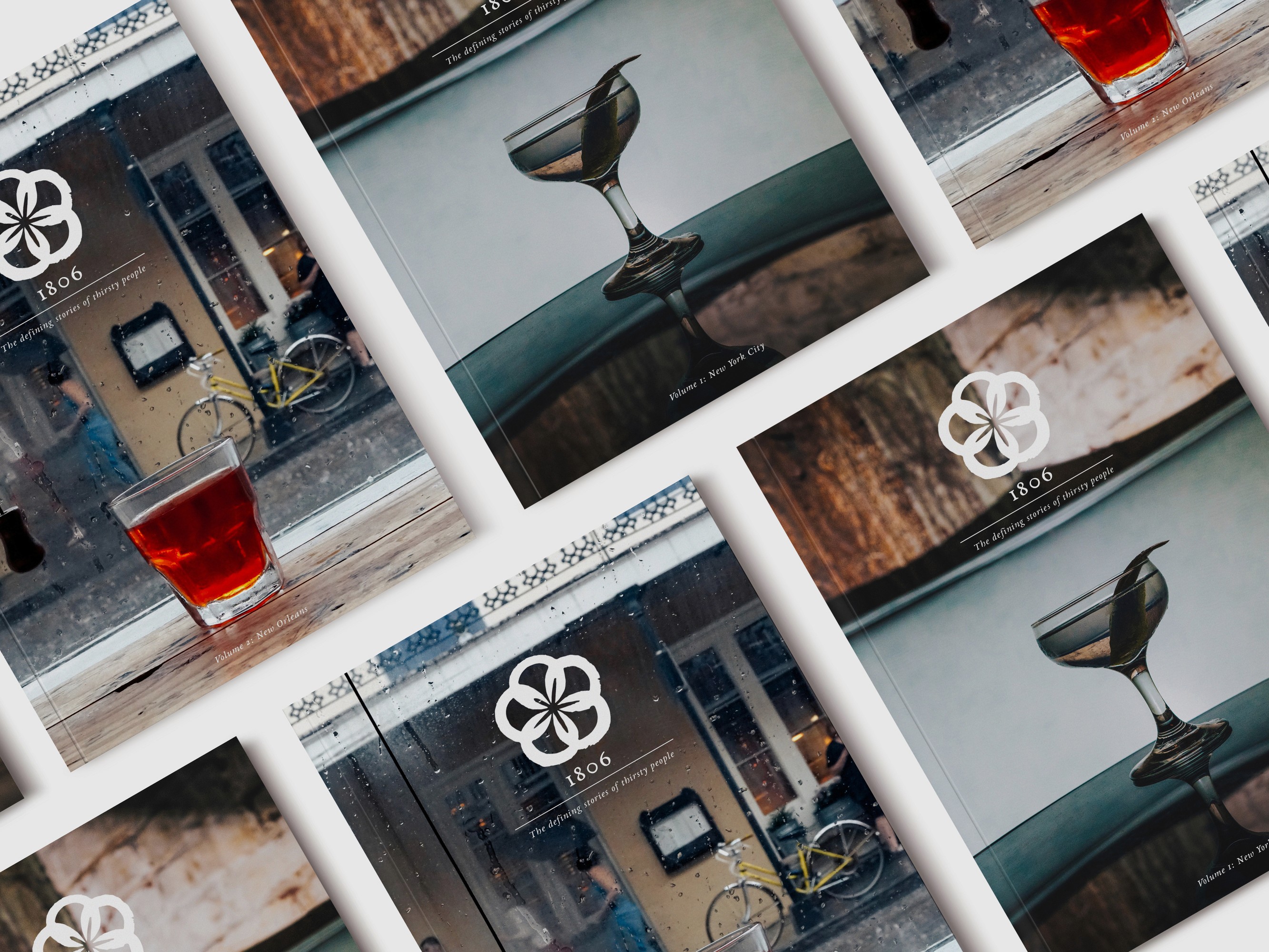
If you want to understand what this studio does at its best, that’s the example. Conceive it, shoot it, write it, design it, produce it, ship it. No handoffs, because there was nobody to hand off to. And the subjects weren’t the usual names. The doorman at Employees Only who became a bartender. The bar back at Harry’s who made seventeen Negronis in a row until Sean Muldoon said they tasted right. The regular at the NoMad with his initials cut into a crystal glass on the shelf. The single mother in Hell’s Kitchen whose daughter brought her cocktail-magazine clippings to third grade for a report called My Favorite Person in the World. The Air Force psychiatrist who emailed a New Orleans bartender from Afghanistan to say, you don’t know me, but someday I’d like you to make me a Mint Julep. Nobody had asked these people anything. We did, and we put them in a magazine. When Gates Otsuji read his piece he wrote back that he’d never thought much of his own story, he’d just lived it, until we found the connections he didn’t know were there. That’s the work we’re built for: finding the story the brand deck missed and making it look like it always mattered.
The plan was to complete the line everyone attributes to Tennessee Williams: America has only three cities, New York, San Francisco, and New Orleans, and everywhere else is Cleveland. San Francisco was the volume we wanted most. It’s where we both started bartending, years before New York. One of the Collectif ambassadors was from Cleveland, and we’d joked that would be the fourth.
It didn’t happen for us. The project unraveled through competing interests and internal expectations, and our involvement ended sooner than we wanted. San Francisco got made as the third volume, just not by us. Heartbreak.
It also taught us the lesson that shaped the next nine years: own the client relationship and own the original. If you don’t, someone else finishes your idea.
The boom, the lease, and the year everyone assumes was the worst
Right after the magazine fallout, Jen Marks, a colleague from Rachel’s Tanqueray days, hired us as the social media agency for Plymouth Gin at Pernod Ricard. Late 2017. That account eventually became Beefeater, Redbreast, Chivas, The Glenlivet, Kenwood, Seagram’s Gin, and full-scale shoots for Absolut and Perrier-Jouët. Pernod became our main client, and 2019 through 2022 was the boom.
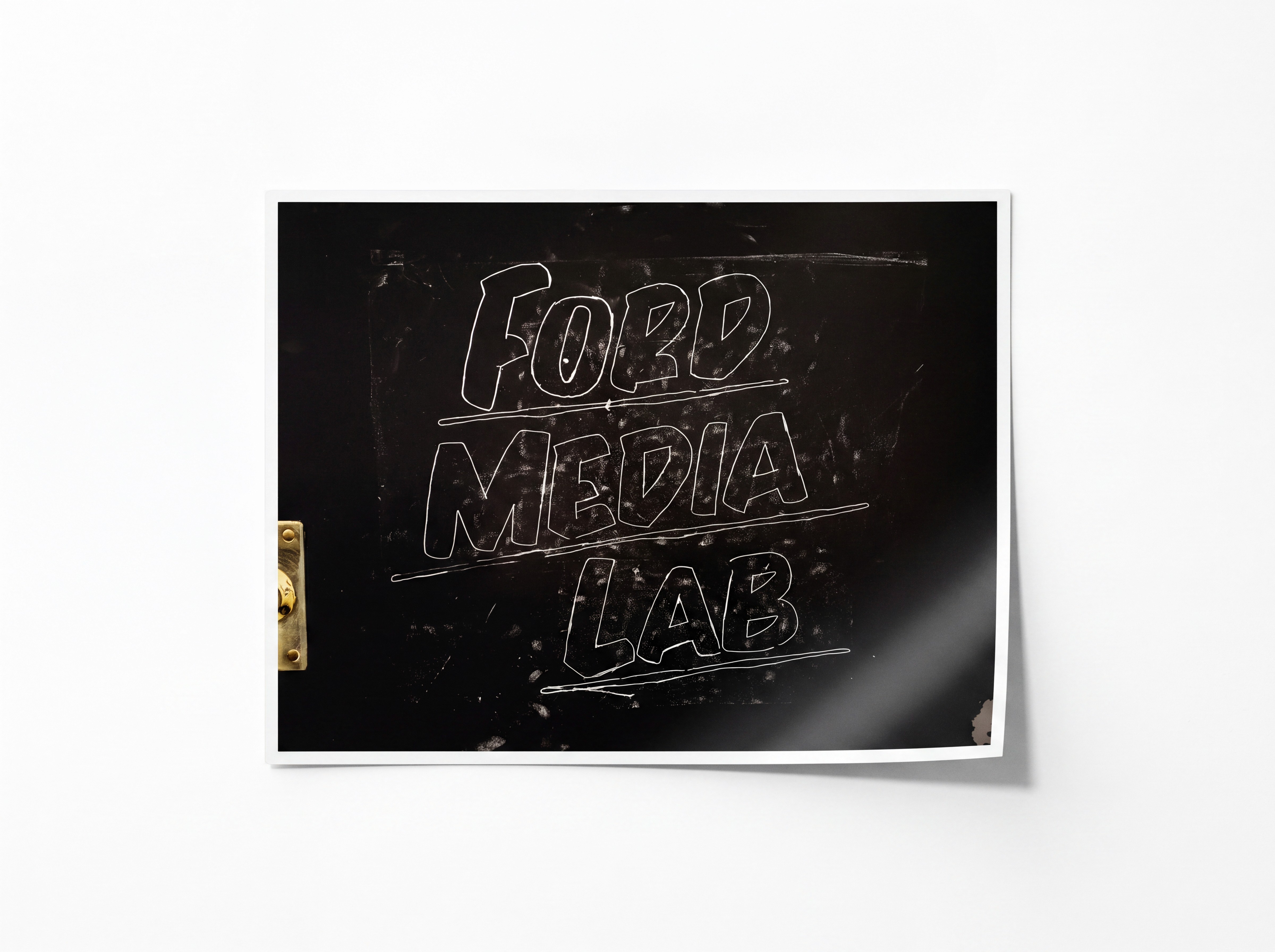
We took our first proper studio in Greenpoint in February 2019, in the old Pencil Factory building. In its previous life it had literally been a rug closet for a rug company, which is exactly as glamorous as it sounds. We painted the walls and ceiling black, paid our friend Julie Bartone to design the buildout of the space, hired Katie Merz to go to town on a wall in her chalk style, and Baron Von Fancy painted the studio name on the door, outline first, filled in later, the way the whole business was going. The rug closet became a studio. Small but mighty. Exactly one year later we moved up to a larger space in the same building with a view of the East River, expecting more client traffic and more in-person shoots. That was February 2020. You know what happened next.
Everyone assumes 2020 was our worst year. It was actually our peak revenue year. That time in New York City was brutal to live through, but the business problem was never money. The problem was that our clients still needed content and nobody could be in a room. So we streamed the set. We built a way to run a full production with the client watching a live feed and directing from their kitchen table, and the virtual shoot went from an emergency measure to the way we worked, virus or no virus. Clients preferred it. Fewer flights, same frame.
The cracks showed in 2023, and we’d felt them coming. Pernod was consolidating agencies and building internal teams, and brands were being steered toward them. We outlasted that mandate by two years, partly because our clients fought to keep us. Then the lease on the East River space came up with rent at $8,115 a month, a number we can both still recite without checking, and with most of our shoots already virtual, paying that to keep a room in Brooklyn stopped making sense.
We moved the studio to Florida in 2023. Clearwater first, for the simplest reasons on earth: the overhead was almost nothing and the Gulf Coast beaches are as good as advertised. Then Miami in 2025, because Clearwater is a lovely place to rest and a hard place to build, and Miami is the opposite. The studio sits in Wynwood, and it’s the last one we’ll need in the traditional sense. More on that below.
The year we built a second business
The hardest year? It was more recent than you would think. 2025. Nine years in, the traditional work we’d counted on had already been dwindling since the previous quarter. Projects proposed in January slipped by months. Budgets for large photography productions were getting reined in across the category, and we were trying to find our footing in a new city at the same time.
We’d been experimenting with AI since 2023, but the tools then were novelty. Interesting, not client-ready. By 2024 we were using hybrid AI regularly on Wolves Whiskey, which still leaned on heavy studio capture and long nights of compositing to make the results hold up. We were also pioneering printing AI-generated backdrops on Duratrans and photographing bottles in front of them on the tabletop. The method worked. It was also still a lot of work and production.
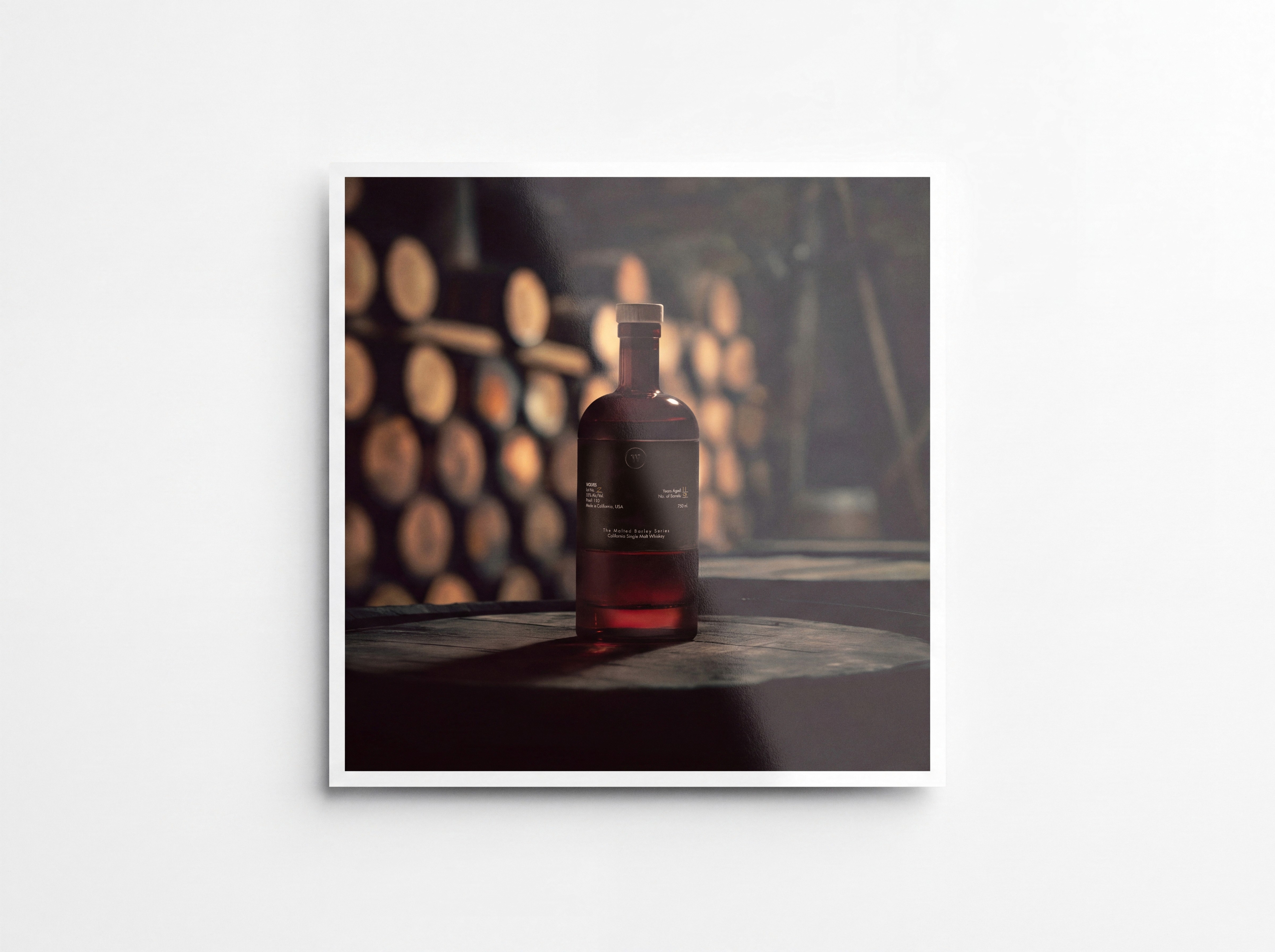
Early in 2025 we made a decision. We would throw everything into learning AI production and building it into a real service for our clients, or we would keep waiting for a shoot calendar that wasn’t coming back. We chose the first.
The specific date this new business model clicked was the release of Nano Banana in August 2025. Until that model, hybrid work needed studio light and Photoshop to look real. After it, production could go almost entirely digital and still meet a premium spirits brand’s standard for the bottle, which is a high standard, because glass has no surface of its own and the liquid flips the background inside it, and if you’ve never stood behind a bar you likely don’t know what correct looks like. The first proof of this new work was with Devil’s Grin Texas Gin: mermaids with martinis, a tiger on a sofa behind a negroni, the kind of scene you’d never build on a tabletop. Within months that had become hyperrealistic environments where no tabletop was needed at all, and from there we developed the digital twin method that now runs most of our work.
By the end of 2025, roughly ninety percent of what left the studio was hybrid. It felt like we’d built a new business inside the old one, carrying the Ford Media Lab name and nine years of client history but doing the work an entirely different way. And it worked. The business that was drying up in early 2025 came back by the end of it, with new clients who arrived for the hybrid method and stayed for the trade fluency running it. Things were buzzing again, and it felt like 2016 all over again, with one difference. In 2016 the optimism was two cameras and no idea. Now it’s ten years of knowing exactly what correct looks like, plugged into tools that can build things that could never have existed, and most days we’re still genuinely amazed at what comes out of that. That’s not relief. That’s the next ten years.
What people are actually buying
Ask Rachel at a party what we do and she’ll say we’re a marketing and ad agency known for social and content, but what people are really buying is us: two spirits industry experts who know how to help a brand claim relevancy through trade experience, industry network, and creative capability.
The ledger backs her up. Over $5 million in revenue as a mostly two-person team. Two full-time contractors from 2019 to 2021 (shout out to Ryan and Sarah), and a trusted bench of talent flexed in for projects since. More than forty brands. Six-figure shoots and six-figure retainers. More productions than either of us can count and more 3am exports than we’d care to remember.
The number we’re proudest of isn’t on that list. It’s how many clients have hired us multiple times, from different companies. Emma brought us from Rémy Cointreau to Cincoro to Roué. Jen brought us from Tanqueray to Plymouth to Wolves. Erick Castro, Bartender At Large, has been client, collaborator, and friend for the full decade and now co-operates The LAB with us. Relationships in this business follow people, not logos. We built the studio around that fact before we could have named it.
The computer is the camera of the mind’s eye
We’ve said for a while that our line of work is heading toward a post-camera world. The more precise version is a post-production world, not in the editing sense, but in the sense that production itself is getting smaller, less physical, more digital, and less bounded by what fits in a room. Love it or hate it, that’s where it’s going. We happen to love it, because we’ve always been a small team and this is the first time the tools have matched the pictures in our heads.
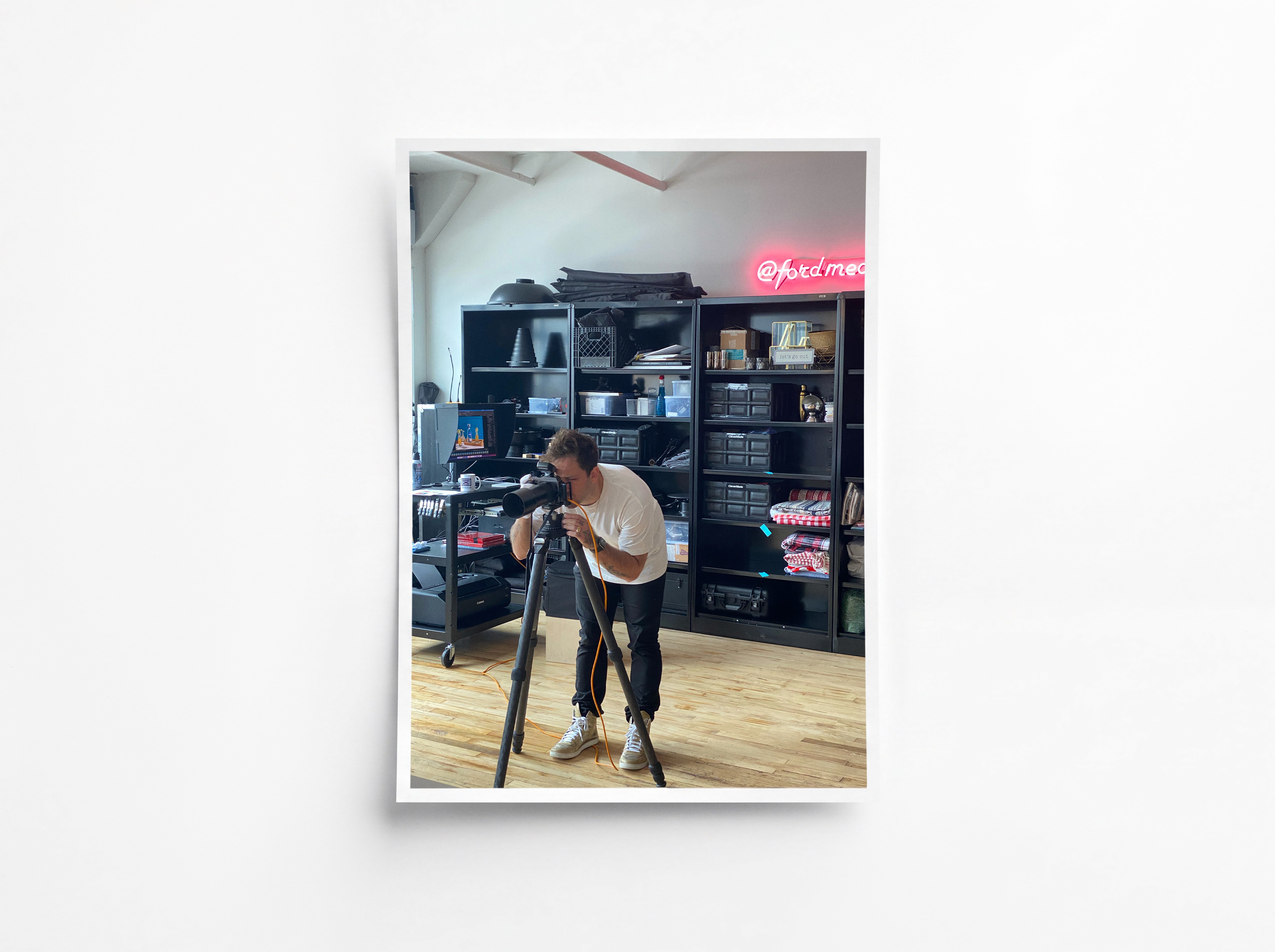
It means the studio era is winding down and something leaner is taking its place. The gritty production spaces that got us here, the Greenpoint floors, the whimsical mural and banana wallpaper, the overworked strobes in Wynwood, were built for a way of working our clients no longer need. Prop libraries become files. Camera gear streamlines to the Hasselblad, a few Profoto heads, and a tabletop for capturing digital twins. The budget that used to go to lenses goes to compute. What comes next is a nice desk in a sunny office, a very fast machine, and a corner to shoot a bottle in.
The rules don’t change. Real bottle, real glass, real light on the capture. Rendered, not recorded, on the disclosure. Every delivery signed. Every gram of carbon and every liter of water accounted for. A studio that came up behind the bar and still knows what a correct Martini looks like when the refraction is wrong.
None of this happened alone. To the brand managers who bet on two people with no portfolio, the bartenders who let us into their stories, the clients who took us with them from company to company, the contractors who answered late calls, the friends who became collaborators and the collaborators who became friends, and the family who heard ‘we’re moving the studio again’ more times than was fair: thank you. You know exactly who you are. So do we, every one of you. That’s the point of a small studio.
Ten years ago a boss asked if not now, when. We answered by buying two cameras we didn’t know how to use and shooting seventy-five cocktails in a light tent. We’ve been answering the same way ever since.
Aged ten years. Bottled at strength, and we’re still pouring.
by // Kyle and Rachel Ford


