Why visual intelligence means embracing AI now
tl;dr
The creative industry isn’t debating AI anymore—it’s building with it. Premium brands now partner with studios that understand this truth: AI doesn’t replace creative vision, it amplifies it. Explore how AI-enhanced workflows increase productivity by 66% while expanding creative possibilities that traditional processes can’t match, and why studios mastering these tools today are capturing the clients who demand visual intelligence at scale.
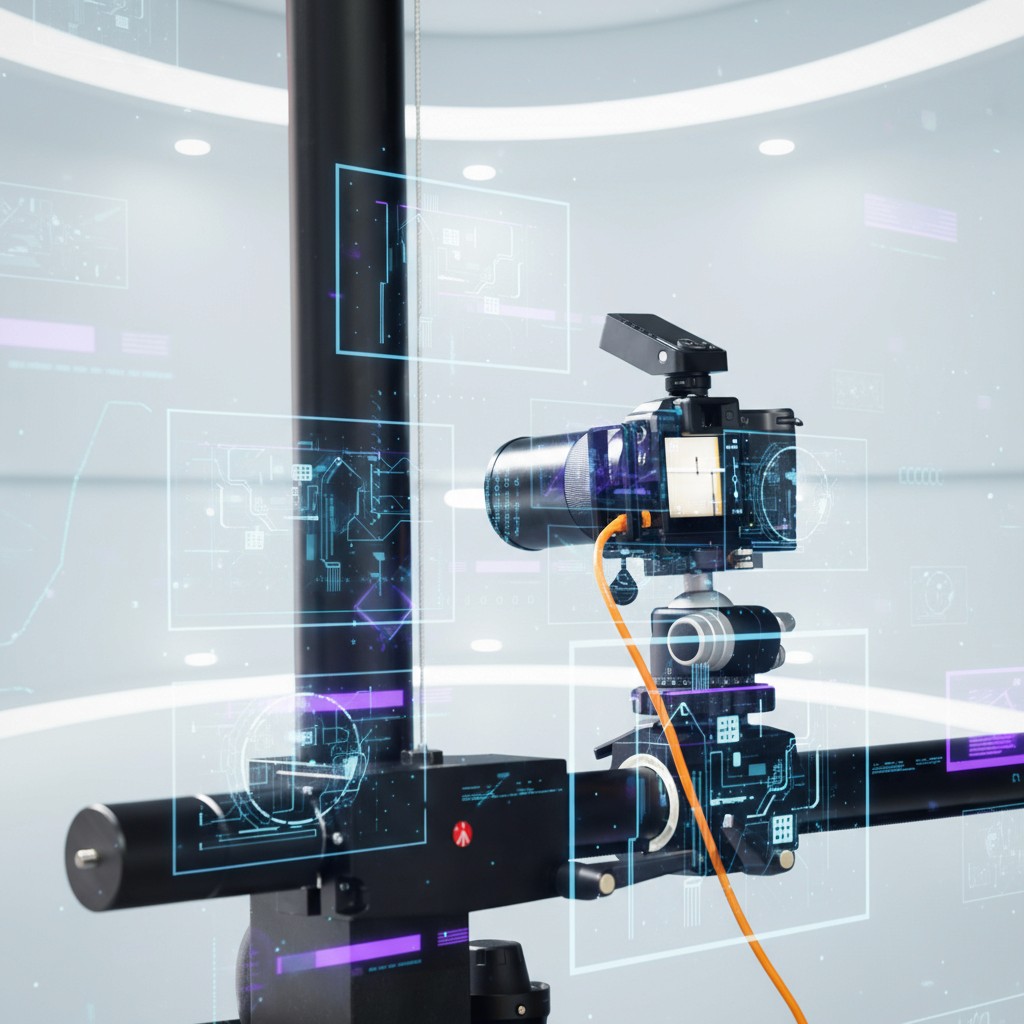
The creative industry stopped debating AI and started building with it. Nielsen Norman Group measured a 66% productivity gain from generative AI across three controlled studies, and premium brands now expect the speed and scale only AI-assisted production delivers. The studios thriving didn’t abandon their craft. They multiplied it. AI doesn’t replace creative vision. It amplifies it.
The creative industry isn’t debating AI anymore. It’s already building with it.
While some studios hesitate, premium brands are partnering with teams that understand one thing: AI doesn’t replace creative vision, it amplifies it. The question facing every creative isn’t whether to adopt these tools. It’s whether you’ll lead the transition or watch competitors capture the clients who demand it.
This isn’t about chasing trends. It’s about survival, growth, and staying relevant in an industry that rewards evolution over resistance.
How fast did AI actually arrive?
The shift happened faster than anyone predicted. Grand View Research projects the generative-AI market past $100 billion by 2030, growing roughly 37% a year. Studios using AI-enhanced workflows move faster and reach creative territory traditional processes can’t touch.
Premium brands now expect the speed, consistency, and scalability that only AI-assisted production provides. Studios still processing every frame by hand aren’t protecting their craft. They’re limiting their future while AI-fluent teams expand into work that was previously impossible. The photographers, art directors, and content strategists thriving today didn’t abandon their expertise. They multiplied it.
Does AI replace creatives, or make them more valuable?
AI doesn’t replace creative professionals. It lets them do work that wasn’t possible before.
When AI handles routine processing, color correction, and asset optimization, human creativity moves to where it creates the most value: strategic thinking, concept development, and the nuanced decisions that turn good content into brand-defining work. You become a creative director, not just a creative contributor.
Client relationships deepen when efficiency rises. Faster turnaround isn’t rushed work. It’s more iterations, more collaborative exploration, more time on the details that drive measurable results. Nielsen Norman Group measured a 66% jump in business-user productivity from generative AI across three controlled studies. The most ambitious creatives want to work with the best tools, not outdated processes, and the brands building long-term partnerships want studios that deliver both artistic excellence and operational efficiency.
How Ford Media Lab uses AI
We’ve built our entire workflow around one principle: human creativity should be spent on uniquely human challenges.
Pre-production: AI analyzes brand guidelines, generates mood boards, and predicts creative directions that resonate with target audiences, freeing our team to push concepts toward extraordinary execution.
Production: Real-time AI assistance lets us experiment more freely, knowing technical adjustments, environmental changes, and asset variations integrate seamlessly in post.
Post-production: While AI handles color grading, format optimization, and basic retouching, our team focuses on storytelling, emotional resonance, and brand alignment.
Client collaboration: AI-powered asset delivery and project management means clients get exactly what they need, when they need it, in the format they need, freeing the conversation for strategy instead of logistics.
Why early adoption compounds
The creatives thriving in this landscape aren’t just using AI. They’re AI-fluent. They understand how to direct these tools, when to trust them, and where human intervention creates the most value.
That fluency compounds. As AI capabilities expand, the people who mastered the early tools push further into uncharted territory, while studios still debating adoption fall further behind, eventually forced to adopt tools their competitors already mastered.
The creative industry has always rewarded innovation. The photographers who embraced digital over film. The designers who moved from print to web. The agencies that understood social media before their competitors did. AI is the same shift. The only question is whether you’ll be among the first to master it or the last to surrender to it.
Where we stand
At Ford Media Lab, we’re shaping this shift, not adapting to it. Every project is a chance to explore new possibilities. Every client relationship is a collaboration in pushing creative boundaries.
The most compelling work happens at the intersection of human imagination and technological capability. The creatives who thrive here don’t fear AI. They’ve learned to wield it as the ultimate creative partner. The ones who adapt discover capabilities they didn’t know they had.
This is our decade to define what’s possible. The future belongs to the partners who see AI not as competition, but as the tool that turns good content into fascination at scale.
by // Kyle Ford


