The liquid has to be right
tl;dr
Generic AI renders impossible pours, wrong glassware, and labels that would never clear legal. Why premium spirits brands need a category-native studio for AI.
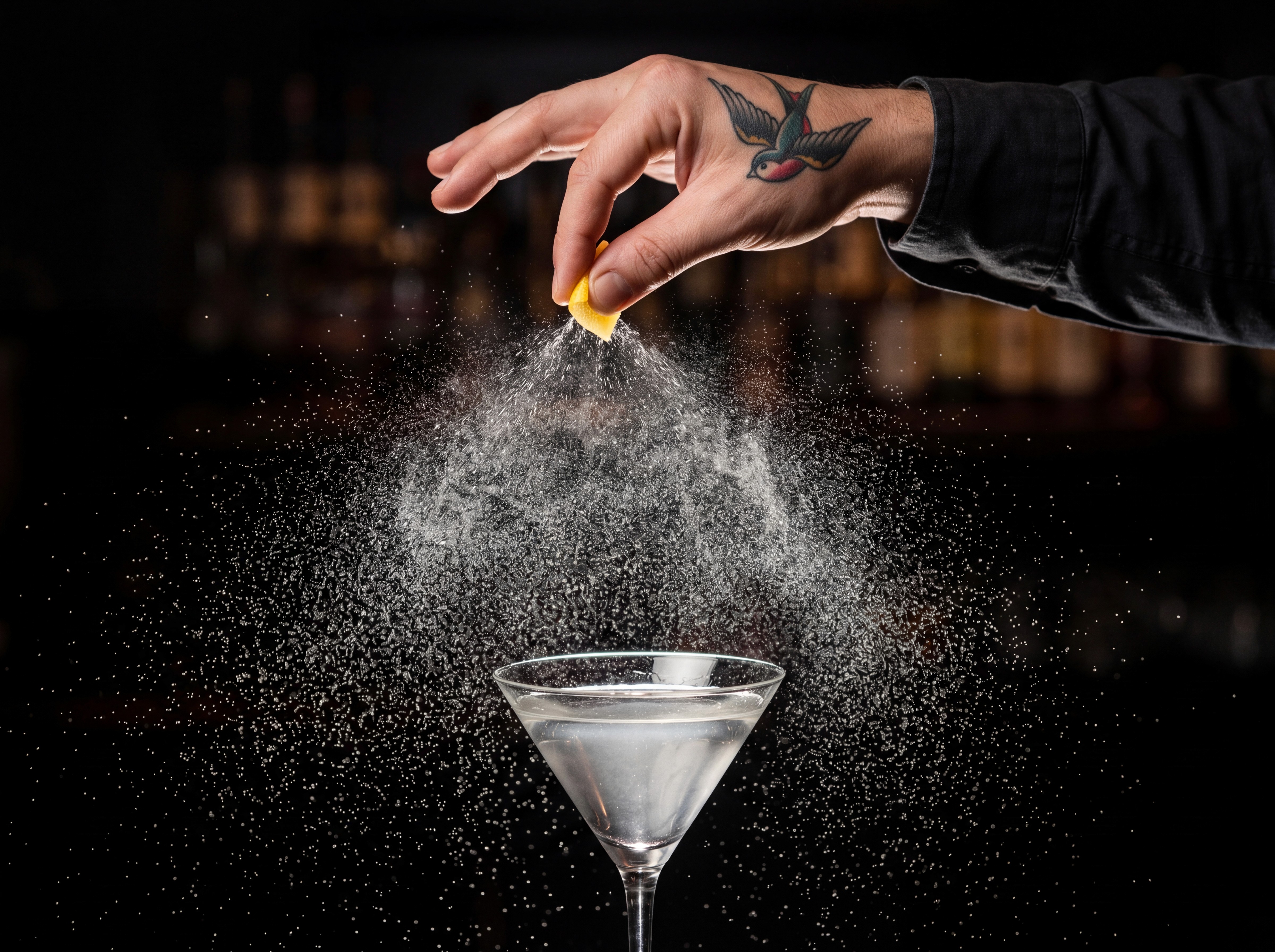
Generic AI content shops don’t know spirits. They render impossible pours, wrong glassware, garnishes that don’t exist, and labels that would never clear legal review. Spirits is a craft category sold through a trade most marketers never see, governed by rules most software ignores. The AI partner worth hiring is the one who already knows the liquid, the serve, and the bartender on the other end of it.
Ask a general-purpose AI tool to render a Margarita and it will hand you a drink no bartender would ever serve.
The glass will be wrong. The rim will run the whole way around instead of half, so there’s no unsalted side to drink from. The garnish will float at an angle gravity doesn’t allow. The tool has seen a million photographs of cocktails and understands not one of them. That gap, between having seen a thing and knowing it, is the whole problem with using generic AI for a craft category.
Why does generic AI get spirits wrong?
Because it was trained on pictures, not on the thing itself. It doesn’t know a Negroni from a Boulevardier by color. It doesn’t know which glass the drink belongs in, how high to pour, or that a twist is expressed over the surface and then dropped, not balanced on the rim like a tiny canoe. Ask for a specific build and you get a plausible-looking lie.
The bottle is worse. We’ve watched a model invent a brand name, an ABV, and a founding year on a label that was supposed to be blank. For our own spec work, that’s a fun party trick. For a real SKU that connoisseurs will inspect and lawyers will sign off on, it’s a disaster. In spirits, the bottle is the brand. Product fidelity isn’t a nice-to-have, and a studio-true digital twin is the only safe foundation for anything you generate around it.
What does category-native actually buy you?
Someone in the room who has actually made the drink. I spent years behind the bar in San Francisco and New York before I ever picked up a camera, which means when a frame is wrong I know why before I know how to fix it: the pour, the dilution, the glass, the garnish mechanics. That instinct doesn’t come from a prompt. It comes from a few thousand nights of service.
It also buys fidelity that survives scrutiny. We capture the real bottle and the details that matter in studio, under lighting matched to the world they’ll live in, so nothing important gets approximated by a render. A generalist shop can make a spirits ad that looks fine to a layperson. We make one that holds up to the person who knows the category cold, because we are that person.
Why does the trade still decide who wins?
Spirits doesn’t sell like other CPG. It’s built on-premise, in bars, through bartenders, by brand ambassadors who put the bottle in a guest’s hand and tell its story. That world has its own language, its own gatekeepers, and its own loyalties, and no AI tool has ever set foot in it. We came up in it.
That’s the part that compounds. The best client relationships in this business follow people across their careers. A brand manager we shot for at one house calls us from the next one, and the one after that. AI can render a bottle in an afternoon. It can’t carry eighteen years of trust across three job changes. The technology is rented. The relationships are owned.
What about the rules?
Spirits marketing in the US runs under the DISCUS Code of Responsible Practices, a voluntary standard the industry has held to since the months after Prohibition and updated again in 2025 to keep pace with social media and new technology. It governs both content and placement. Ads are meant to run only where at least 73.8% of the audience is reasonably expected to be of legal drinking age, and the Code explicitly covers packaging, labels, and product placements, precisely the materials AI now generates.
A general-purpose AI shop doesn’t know the Code exists. We build to it without being asked, because we came up inside the kind of companies that hold themselves to it. Knowing where the line is drawn is part of the craft, not an afterthought bolted on at legal review.
The technology is rented. The category is earned.
AI is a tool. Spirits is a craft and a trade, and the brands that win with AI are the ones who put the technology in the hands of people who’ve stood behind the bar, lit the bottle, and shaken hands with the buyer. You can subscribe to the tool tomorrow. You can’t subscribe to the eighteen years. That’s what we are.
by // Kyle Ford
(more intel)


