Andy Warhol would have loved AI (and so should you)
tl;dr
Andy Warhol didn’t paint Campbell’s Soup cans by hand—he used silk screening, a commercial technique that horrified critics. Today’s AI resistance sounds remarkably familiar. The tool doesn’t make the art. The creative director does.
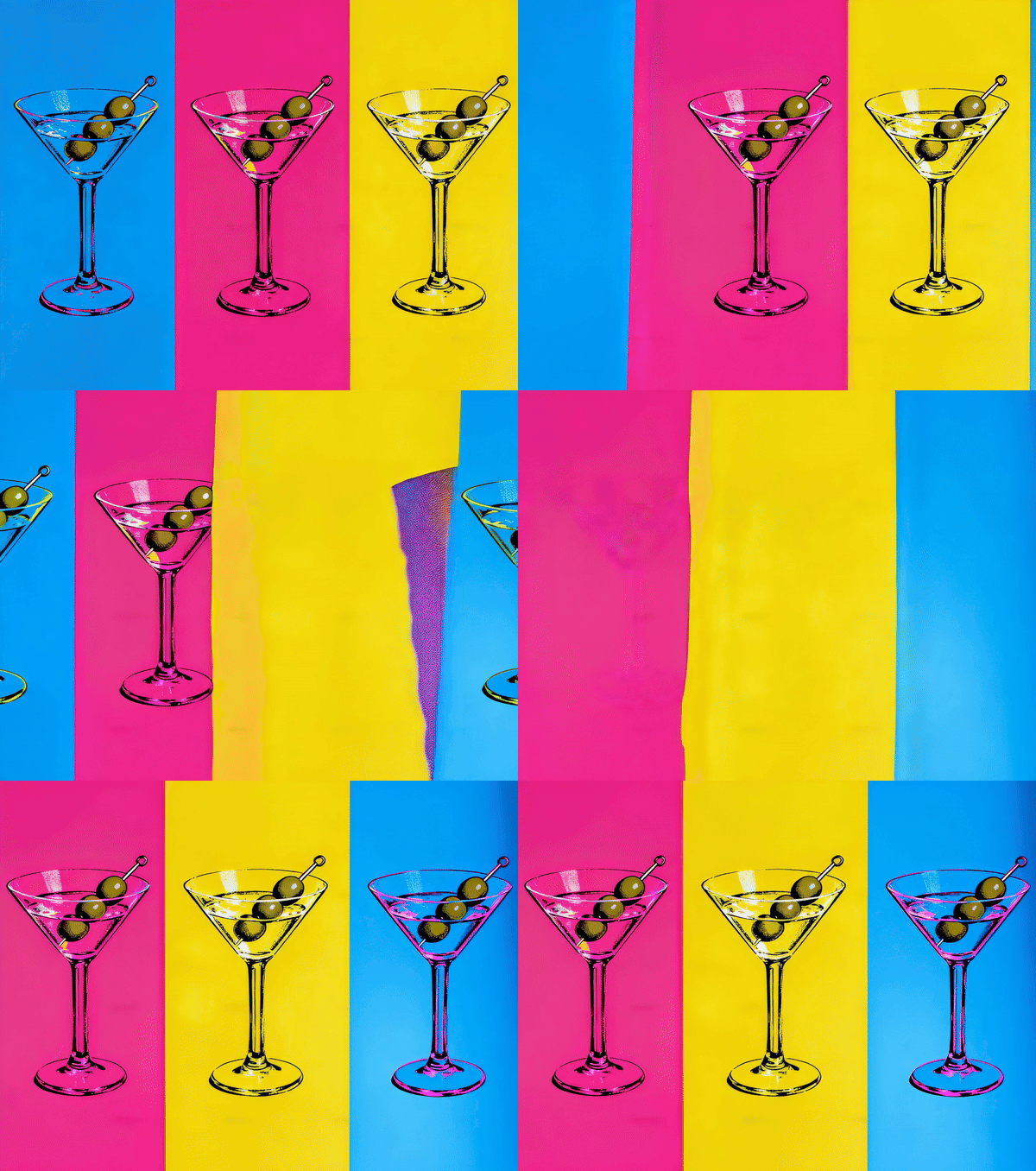
A spirits brand turned down our AI work to protect its “craft and tradition.” Warhol heard the same thing when he dragged silk screening, a commercial technique, into fine art. The tool was never the art. The direction was. The line between AI slop and intentional work is the human vision aiming it, exactly as it’s always been.
This week, we pitched a premium spirits brand on AI-enhanced visual content. After we delivered custom branded assets with intentional creative direction, the response came back:
“We believe that our product’s magic comes from the craft and tradition… Using AI, no matter how advanced, introduces a layer of separation from that core message. Our current direction focuses on highlighting the artisanal process, the people, and the culture behind every bottle.”
The rejection stung. It also crystallized something: we’re living through the exact same resistance Andy Warhol faced when he brought commercial techniques into fine art.
What did Warhol understand that AI skeptics don’t?
Andy Warhol didn’t paint Campbell’s Soup Cans by hand with traditional brushes. He used silk screening, a commercial printing technique that horrified the art establishment. Critics called it mechanical, soulless, “not real art.”
Sound familiar?
Warhol understood three things today’s AI skeptics are missing:
Democratization: His Factory approach made art creation accessible, collaborative, and scalable — exactly what AI does for visual storytelling across brands of every size.
Repetition with refinement: The multiple Marilyns weren’t mass production. They were variations, concepts tested, iterations toward something perfect.
Vision over medium: It was never about the silk screen. It was about what Warhol directed that screen to create.
What separates intentional work from “AI slop”?
What that brand missed: the difference between “AI slop” and intentional creative work is the same as the difference between a random silk screen and a Warhol. It’s the human vision directing the process.
Every AI-generated asset we make is guided by nearly a decade of creative direction, deep brand strategy, intentional artistic choices, cultural insight, and endless refinement.
The tool doesn’t make the art. The creative director does.
The Factory method for modern brands
Warhol’s Factory didn’t replace human creativity. It amplified it. He surrounded himself with collaborators, experimented with new techniques, and pushed boundaries while holding his artistic vision steady.
The most forward-thinking brands today understand this. They’re not asking whether AI is “authentic.” They’re asking how it serves their story.
What this means for your brand
While competitors debate the legitimacy of new tools, the brands moving first are already gaining ground: speed to market on custom visual content, cost efficiency in testing concepts, unlimited iteration until the vision is right, and scalable creativity across every touchpoint.
The brands that win won’t be the ones clinging to “traditional” methods. They’ll be the ones combining human creative intelligence with the best tools available.
The creative field is wide open
Warhol once said, “I want to be a machine.” Not to strip the humanity out of art, but because he understood that systematic creativity could outproduce random inspiration.
Today’s AI tools are our silk screens. The question isn’t whether they’re “real” enough. It’s whether we’re visionary enough to use them intentionally. We direct AI with the same intentionality Warhol brought to silk screening, and we sign the result. More precisely human work.
The Factory is open. The field is wide open.
by // Kyle Ford
(more intel)


